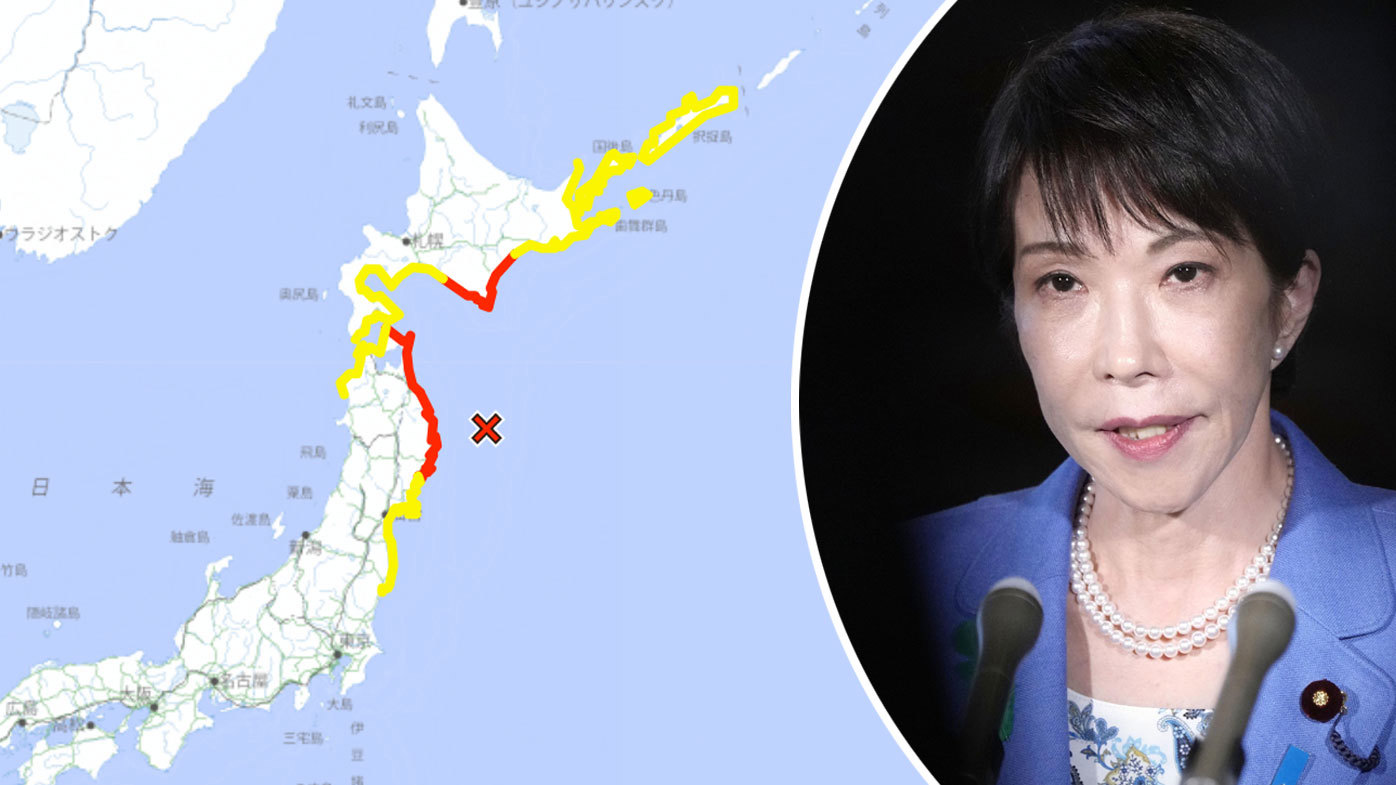
Officials said the advisory was not a quake prediction but urged residents to raise their preparedness, such as emergency food and their grab bag just in case, while continuing their daily lives.
Japan has issued an advisory for northern coastal areas for an increased risk of a possible mega-quake induced by a major earthquake.
The Cabinet Office and the Japan Meteorological Agency said there was a 1 per cent chance for a mega-quake occurring on the northern Japanese coast in the next week or so following the powerful quake earlier on Monday near the Chishima and Japan trenches.
Officials said the advisory was not a quake prediction but urged residents in 182 towns along the north-eastern coasts to raise their preparedness while continuing their daily lives.
READ MORE: Driver fired after schoolboy becomes trapped in bus doors, dragged down road
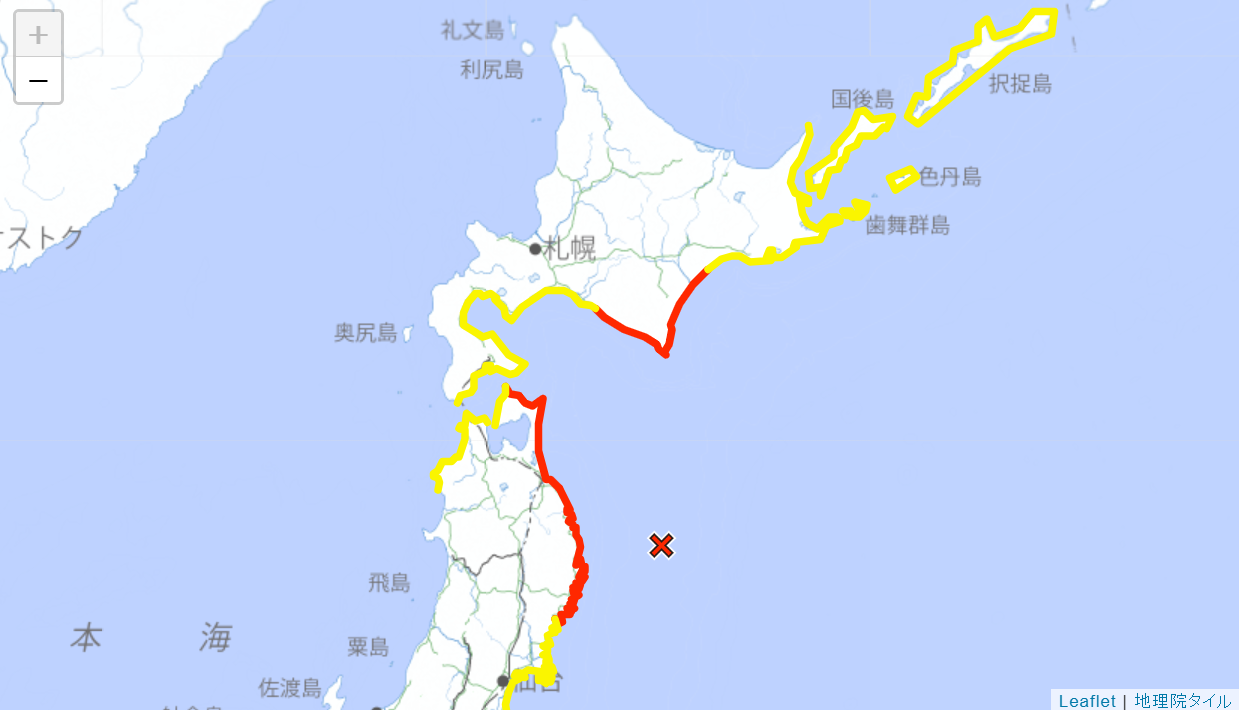
The advisory for the region is the second in recent months. One was issued following another major quake in December. No major subsequent quake occurred.
A powerful earthquake struck off the northern Japanese coast earlier on Monday, and the Japan Meteorological Agency issued a tsunami alert in the region, sending residents to rush over to safer grounds. So far, no major injuries or damages have been reported.
The quake registering a preliminary magnitude of 7.7 occurred off the coast of Sanriku in northern Japan about 4.53pm (5.53pm AEST), at a depth of about 10 kilometres below the sea surface, the agency said.
Japanese Prime Minister Sanae Takaichi has urged residents in affected areas to evacuate immediately and said the government had set up an emergency task force, CNN reports.
"Residents in areas where tsunami warnings have been issued should immediately evacuate to higher ground or safer locations such as evacuation buildings," Takaichi told reporters on Monday, according to the national broadcaster NHK.
Authorities were doing their "utmost to assess the damage, implement emergency disaster response measures such as search and rescue operations, and provide timely and accurate information to the public", Takaichi said.

"At this time, we are still confirming the extent of human and material damage, but we will receive detailed reports shortly and proceed with disaster response efforts," she said.
Japan's disaster management agency said it had issued evacuation orders to 171,957 people in five prefectures.
No injuries or damage to homes has been recorded as of yet, chief cabinet secretary Minoru Kihara said in an update, but the situation is still being assessed. Kihara added that there are 200 power outages across the impacted areas and authorities are working to restore service.
A CNN producer on the ground in Tokyo reported feeling the building they were in shake for about seven minutes.
The operator of the bullet train service that runs between Tokyo and Shin-Aomori station said the train had been suspended due to a power outage caused by the earthquake, NHK reported.
A tsunami of about 80 centimetres was detected at the Kuji port in the Iwate prefecture, and a smaller tsunami of 40 centimetres was recorded at another port in the prefecture, the agency said.
A tsunami of up to three metres could hit the area, the agency said. In addition to the tsunami alert in Iwate and Aomori to the north and south-eastern Hokkaido, the agency also issued a milder tsunami advisory for the coasts of Miyagi and Fukushima, south of the epicentre.
Footage on NHK television showed many people driving up to parks and other facilities on higher ground. In the town of Tomakomai in Hokkaido, a resident came to a hilltop park after picking up his child at a cram school and said he planned to stay until the alert is lifted.
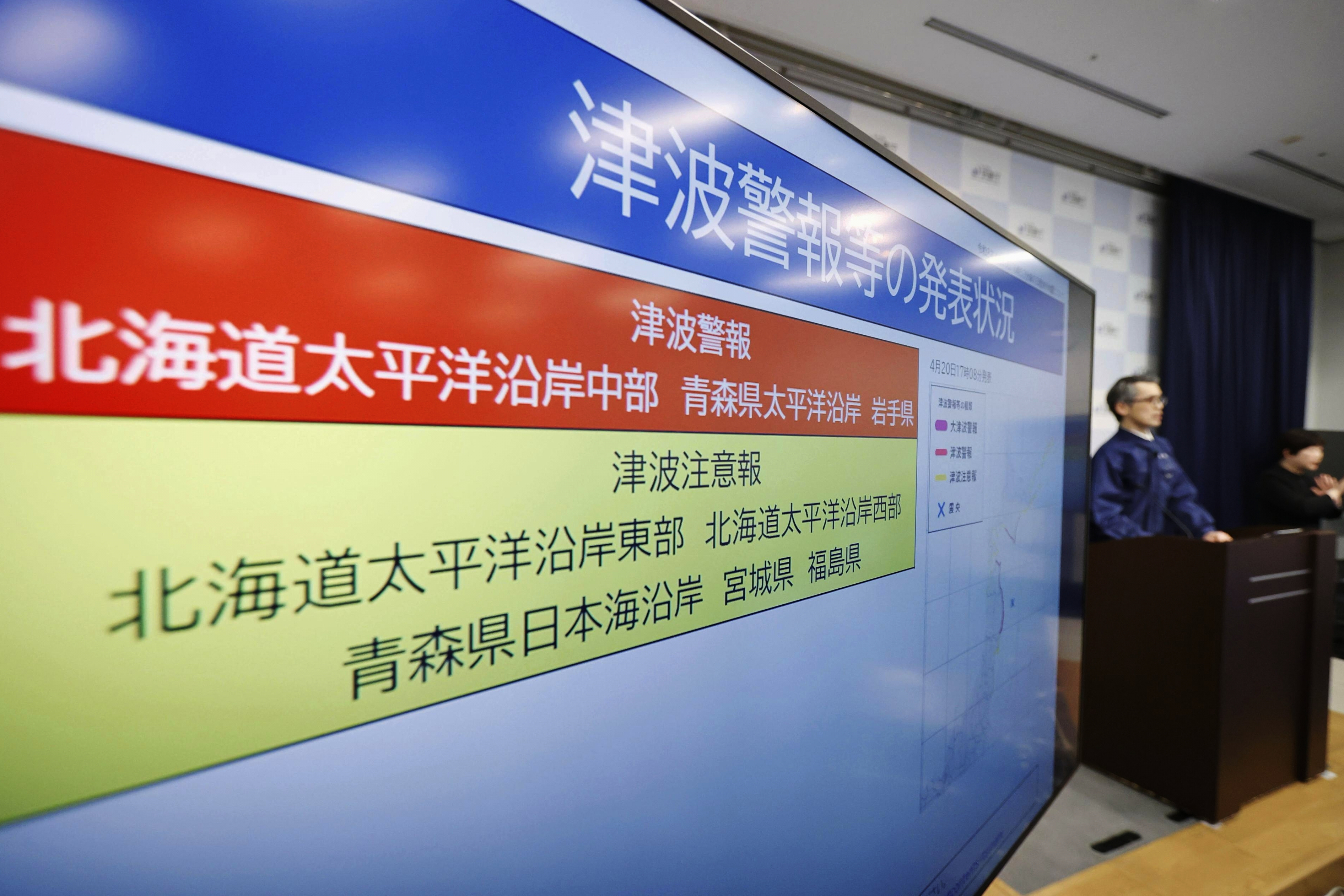
Iwate and three other northern prefectures issued non-binding evacuation advisories to more than 128,000 residents, according to the disaster management agency.
The Fire and Disaster Management Agency said officials are assessing the situation but so far no damage or injuries have been reported, including at power stations and other facilities.
The Nuclear Regulation Authority said nuclear power plants and related facilities in the region were all intact and no abnormalities were detected.
Another powerful 7.5 magnitude quake in December left dozens injured.
It's 15 years since a magnitude 9 earthquake and tsunami on March 11, 2011, ravaged parts of northern Japan, caused more than 22,000 deaths and forced nearly half a million people to flee their homes, most of them due to tsunami damage.
Some 160,000 people fled their homes in Fukushima because of the radiation spewed from the tsunami-hit Fukushima Daiichi nuclear power plant. About 26,000 of them haven't returned because they resettled elsewhere, their hometowns remain off-limits or they have lingering concerns about radiation.
- Reported by Associated Press and CNN
 Dezi Freeman's hideout: Inside Australia's most famous shipping container
 'Taken far too soon': Tributes flow for pedestrian killed outside comic convention
 Barry Cable found not guilty of sexually abusing eight-year-old while wife slept
 Tax reform aimed at property investors will drive up rents, brokers claim
 'We've certainly seen unpredictability': Wong agrees with Trump
 'Bully, liar': Rebel Wilson slammed in defamation fight
 Pilot killed in chopper crash in outback Queensland
 Driver fired after schoolboy becomes trapped in bus doors, dragged down road
 Big hint Apple's first foldable smartphone is coming this year
 Moment rescue crew arrives 24 hours after divers disappeared
 North Korea launches ballistic missiles toward sea