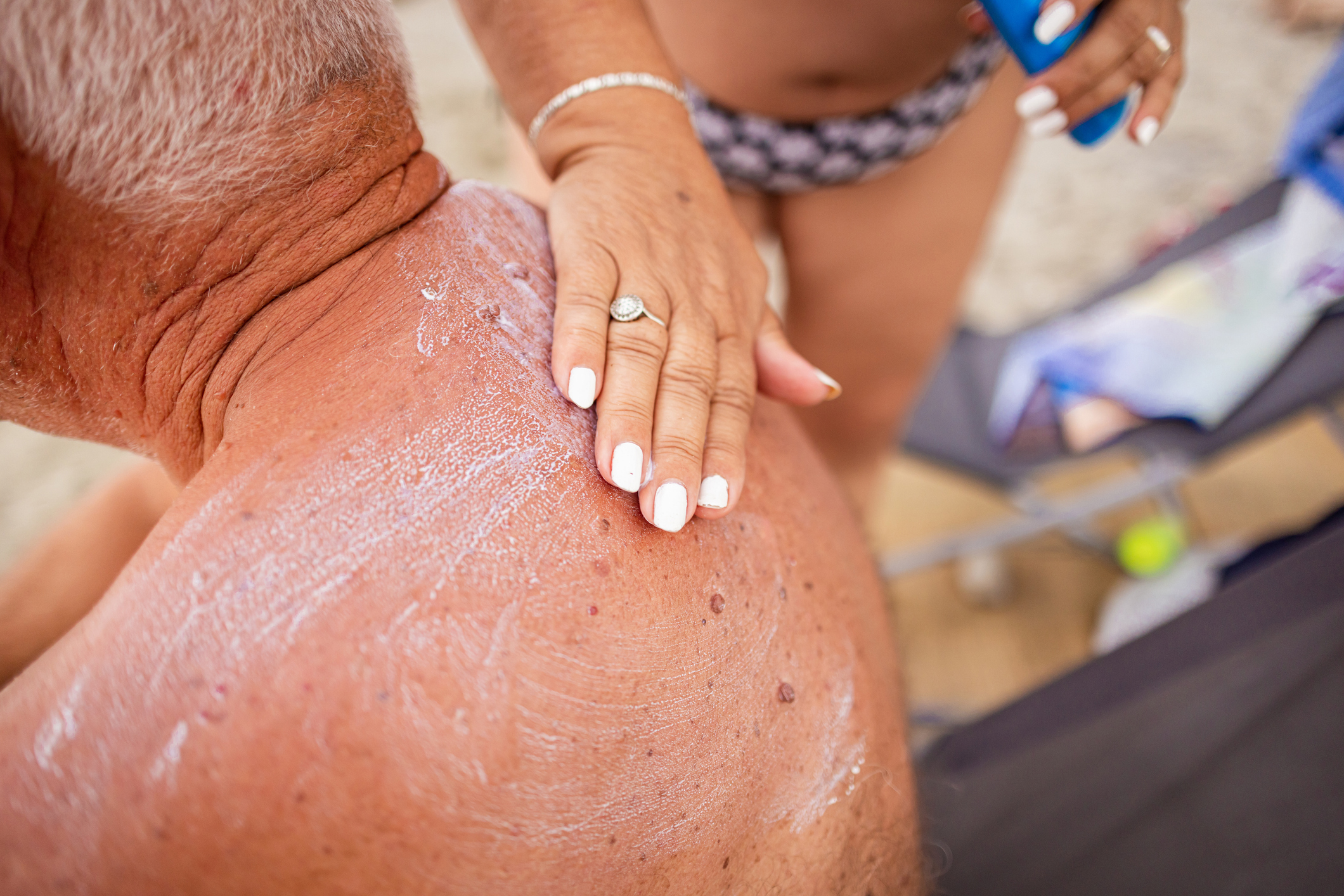
The change would allow sunscreens in the US to include an active ingredient already commonly used in Australia.
A new proposal from the US Food and Drug administration would allow sunscreens in the US to include an active ingredient already commonly used in Australia, Europe, and parts of Asia.
Bemotrizinol is a chemical that provides broad-spectrum protection against both ultraviolet A and B rays. It "has low levels of absorption through the skin into the body, and rarely causes skin irritation," the FDA said in a news release today.
The FDA regulates the safety and effectiveness of sunscreens. New products can be brought to market through an over-the-counter drug review process that sets conditions about how and when they are "generally recognised as safe and effective" for their intended use. Identifying and assessing active ingredients is a key part of the GRASE framework.
READ MORE: Actress Amanda Seyfried doubles down on Charlie Kirk comments
DSM Nutritional Products LLC, with headquarters in both Switzerland and the Netherlands, has submitted a request that the FDA add bemotrizinol as a new active ingredient permitted for use in sunscreens in the US, the FDA said.
The FDA has opened the request to public comments and will conduct a safety and effectiveness assessment under the GRASE framework before determining whether to issue a final order to add bemotrizinol to the active ingredient list for sunscreens.
"Bemotrizinol would be a welcome addition to the current array of effective sunscreen active ingredients already available to American consumers" Dr Karen Murry, acting director of the Office of Nonprescription Drugs, said in a statement.
READ MORE: Time magazine names 'Architects of AI' as its person of the year for 2025
The majority of skin cancers are caused by too much exposure to ultraviolet radiation, which comes from the sun as well as tanning beds or sun lamps.
Staying in the shade and wearing UV-protective clothing, hats and sunglasses can all reduce exposure, but sunscreens, chemical or mineral, are also important tools to protect skin.
Chemical sunscreens – such as avobenzone, oxybenzone, octocrylene, ecamsule, homosalate, octisalate and octinoxate – bind to the top layer of skin and transform UV rays into heat that disperses. Mineral sunscreens, such as zinc oxide and titanium dioxide, form a protective barrier between the skin and the sun.
DOWNLOAD THE 9NEWS APP: Stay across all the latest in breaking news, sport, politics and the weather via our news app and get notifications sent straight to your smartphone. Available on the Apple App Store and Google Play.
 Reality TV star jailed for interfering with crash probe
 Brittany Higgins bankrupted by former Liberal senator after defamation loss
 'So evil': Woman raped by Tom Silvagni says he violated her body and trust
 Second minister refers family travel expenses for audit as Albanese seeks advice
 Major bank hikes fixed rates despite saying more RBA cuts on the way
 Man dies after becoming stuck in mud at Logan boat ramp
 'Monster' who killed Molly Ticehurst to learn fate after pleading guilty
 McCain recalls frozen pizza pocket product after plastic was found inside
 Melbourne's West Gate Tunnel is finally opening. Here's what it means for motorists
 Four-metre tiger shark caught on drumline off popular beach
 Appalling conditions inside notorious Australian prison found by inspectors
 Idyllic tourist hotspot introduces the death penalty for a common offence
 Donald Trump's 'gold card' visa program goes live
 The 'king of all meteor showers' is peaking this weekend. Here's how to see it
 The Christmas toys emergency doctors don't want you to buy for children
 Time magazine names 'Architects of AI' as its person of the year for 2025
 Three teens charged over Sydney shopping centre brawl
 Hundreds of artefacts stolen from Bristol Museum
 Son of AFL great identified as a rapist as order lifts