Many major Australian brands are failing to turn the dial on the gender pay gap, with some even slipping backwards in the past year, a detailed new report has revealed.
Major Australian brands are failing to turn the dial on the gender pay gap, with some even slipping backwards in the past year, a detailed new report has revealed.
The massive annual data dump by the Workplace Gender Equality Agency (WGEA) reports on the gender pay gap for 10,500 Australian employers in both the private and public sectors, accounting for 5.9 million workers.
It shows an incremental overall improvement in the gender pay gap, with half of employers having a gender pay gap in favour of men larger than 11.2 per cent.
LIVE UPDATES: Trump says the 'big wave' is yet to come in war with Iran
This is down from 12.1 per cent last year, but well beyond the target range of five per cent.
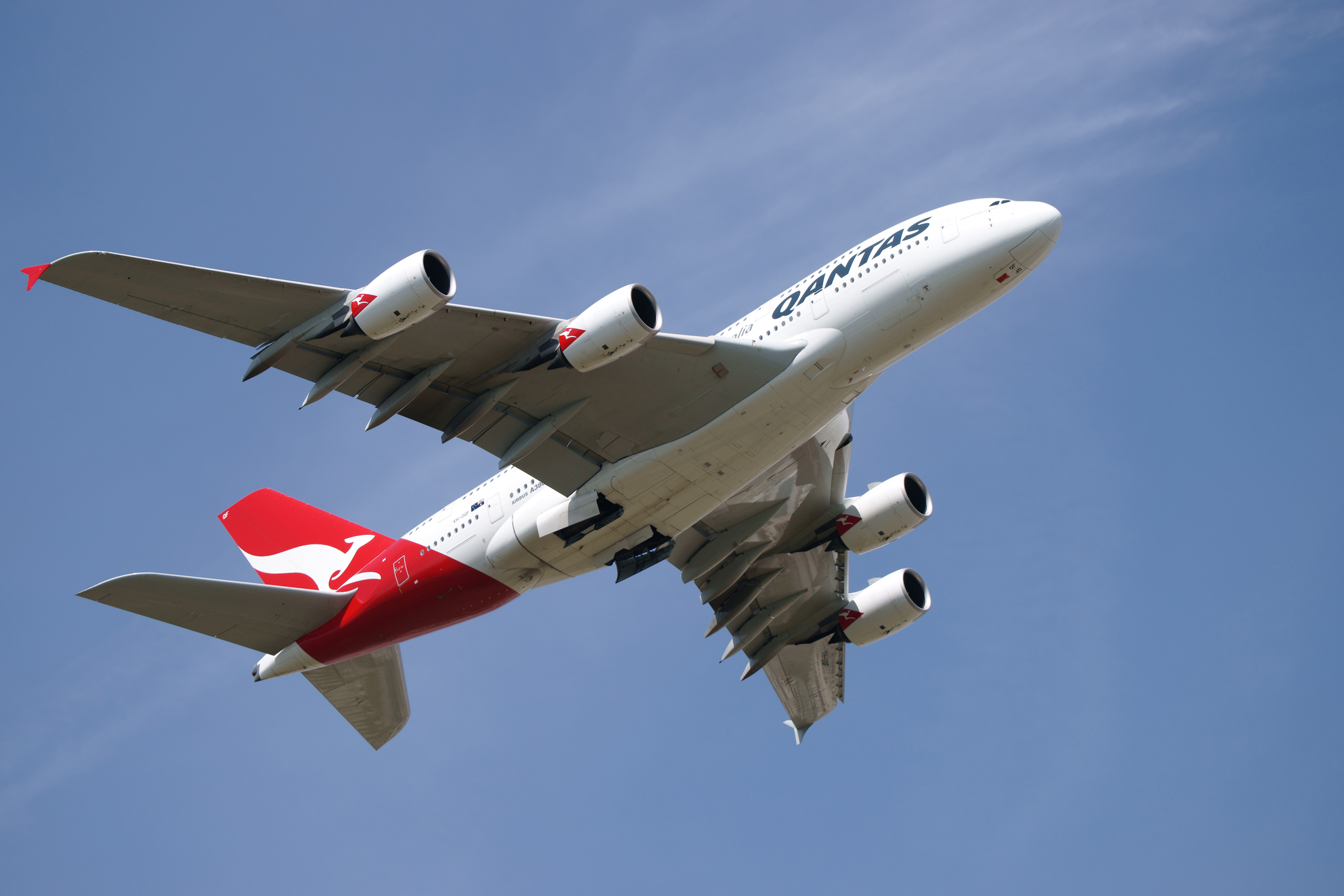
Among the worst performers was Qantas, where the gender pay gap has crept up to 41.7 per cent - up 0.5 per cent compared to a year ago.
While women make up 44 per cent of the national carrier's workforce, they hold just one in seven of their high salary roles, which comes with an average total pay packet of $343,000.
In contrast, more than two-thirds of the carrier's low salary positions - where the average pay packet is $79,000 - are held by women.
At a national level, men are still 1.8 times as likely as women to earn a high salary in the top quartile of earners, averaging $221,000.
Women are also 1.4 times more likely to be low income earners, making an average salary of $60,000.
READ MORE: Cyclone threat puts northern Australia on high alert
"The fact that men are nearly twice as likely as women to be in the highest paid roles and that women still dominate the lowest paid roles should offer a reality check for anyone who thinks Australia has achieved equality in the workplace," WGEA CEO Mary Wooldridge said.
"Employers should treat gender equality like their other business goals. Do a detailed analysis to find the issues, create an action plan to address them and set targets to be accountable for ensuring progress happens."
Employers in high-paying and male-dominated industries are more likely to have the largest gender pay gaps.
Mining and resources company BHP pays its employees an average salary of $201,000, almost double the average Australian wage.
But just over a quarter of its top-earning employees are women, while women make up two-thirds of its lowest paid workers.
BHP has also seen its gender pay gap widen in the past year, from 11.2 to 12.8 per cent.
Banking and the financial sector has previously scored particularly poorly in the WGEA report, but this year has seen incremental improvements amongst the big four.
Commonwealth Bank, where the average annual remuneration is $167,000, has narrowed its pay gap by one per cent in the past year to 21.3 per cent.
It was a similar story at other major banks, with NAB, ANZ and Macquarie Group seeing incremental improvements of 0.9 per cent, 0.4 per cent and 0.7 per cent respectively.
Large differences in discretionary payments, like performance bonuses and overtime hours, are a key driver of many organisations' gender pay gaps.
This is particularly evident for businesses that rely heavily on bonuses and commission, such as the financial sector.
For example, at Bell Financial Group the base pay for men and women differs by just 7.4 per cent, yet the overall pay difference is a stark 55.5 per cent.
Major healthcare providers also faired poorly.
Advana Heartcare - which bills itself as Australia's largest provider of cardiology services with over 500 employees - has a gender pay gap of 69.2 per cent, up almost three per cent in the last year.
One of Australia's largest pathology and radiology providers with over 5000 Australian staff, Sonic Healthcare saw its pay gap rise from 36.2 to 39.9 per cent.
One notable exception however was pathology provider Healius Ltd, which has reduced its gender pay gap by 13.3 per cent in a single year, now sitting at 27.6 per cent.
Nine, the publisher of this website, recorded a gender pay gap of 15 per cent, down from 17 per cent last year.
Chief People Officer Vanessa Morley said Nine was committed to closing the gap, saying "we have made some progress" but "acknowledge there is more work to be done".
NEVER MISS A STORY: Get your breaking news and exclusive stories first by following us across all platforms.
- Download the 9NEWS App here via Apple and Google Play
- Make 9News your preferred source on Google by ticking this box here
- Sign up to our breaking newsletter here
 Mass graves and huge crowds as Iran mourns '168 kids killed by US-Israel strike'
 Widow remembers husband killed in alleged hit-run
 Innocent young family mistakenly targeted in home invasion
 'Extremely dangerous': Explosions spark emergency evacuation warning in Geelong
 Ass it happened: Israel says it has struck Hezbollah 'centre of gravity'
 Armed man shot dead by police after allegedly attacking two women in inner-city Sydney
 Fumbling firebombers almost set themselves alight in arson attack
 Jackie O exits top-rating breakfast show, Kyle Sandilands suspended for 'serious misconduct'
 Conservative commentators lash Donald Trump's decision to attack Iran
 The way you watch TV is about to change — again
 What are Victoria's proposed work from home laws?
 'Tax on households' coming for Aussies due to Iran war
 'No, we're not': How Australia is responding to the escalating conflict
 Mysterious 'glowing orange orbs' seen across parts of regional NSW
 Fierce red rash spotted on Trump's neck
 Diners flee Dubai restaurant after mistaking Ramadan cannon for bomb blast
 Three US fighter jets accidentally shot down by 'friendly fire'