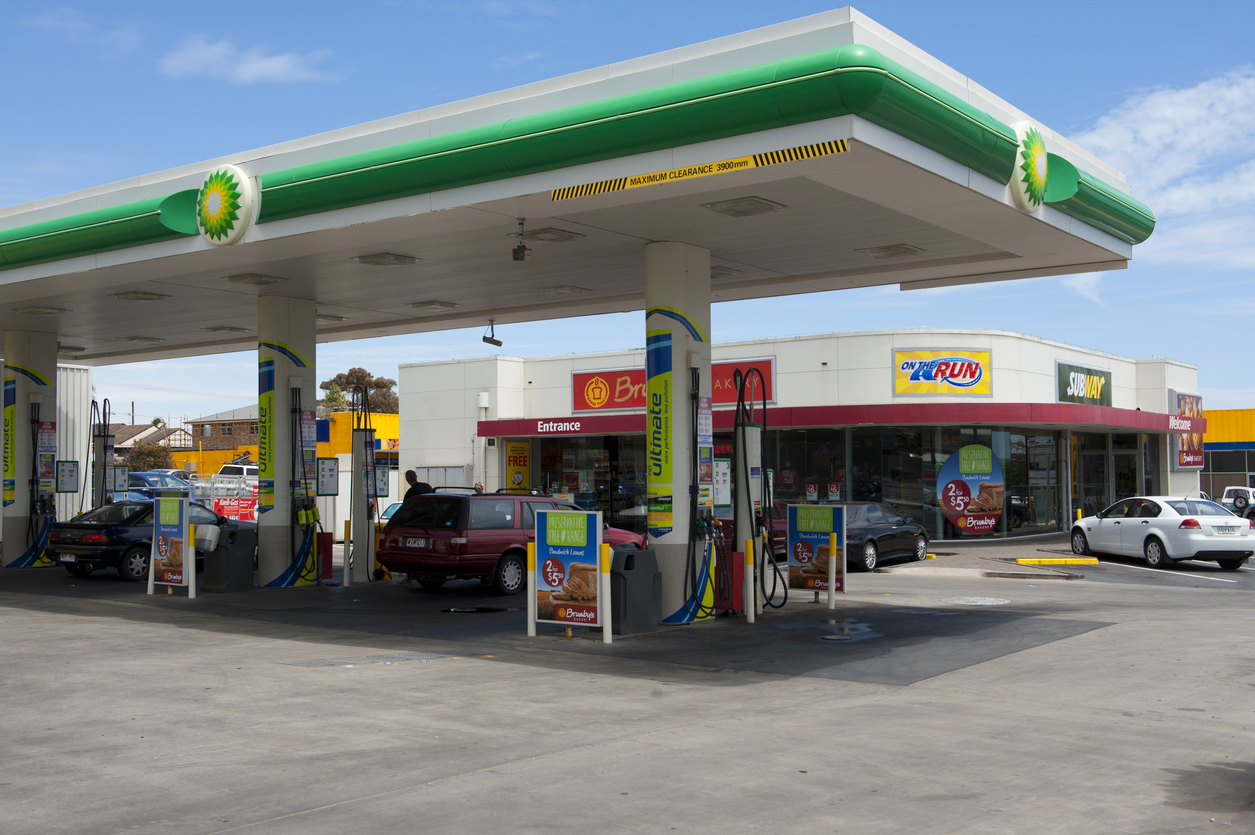
Motorists in Australia are being urged to fill up with fuel before a potential rise in the price of crude oil flows through to the bowser.
Motorists in Australia are being urged to fill up with fuel before a potential rise in the price of crude oil flows through to the bowser.
The US and Israeli strikes on Iran are raising concerns that retaliations in the Middle East could disrupt the flow of oil, which is heavily dependent on the Strait of Hormuz.
Iran, which controls the waterway, also manages the world's third-largest proven oil reserves.
LIVE UPDATES: Iran's chilling vow of revenge as supreme leader's death confirmed
READ MORE: Luxury Dubai hotel damaged as Iran retaliates to attack
READ MORE: Dubai Airport damaged in reported strike, four hurt
"The worst-case scenario for the oil market is an attack on Saudi oil infrastructure followed by a complete closure of the Strait of Hormuz," Andy Lipow, president of consulting firm Lipow Oil Associates, told CNN.
"It remains to be seen if Iran will indiscriminately attack oil tankers in the region, shutting the waterway."
Oil prices could increase as much as $USD5 per barrel, if not more on Sunday, warned Lipow.
The waterway, located between the Persian Gulf and the Gulf of Oman, is only 33.7 kilometres wide at its narrowest point.
It's the only way to ship crude from the oil-rich Persian Gulf to the rest of the world. Iran controls its northern side.
About 20 million barrels of oil, about one-fifth of daily global production, flow through the strait every day, according to the US Energy Information Administration (EIA), which called the channel a "critical oil chokepoint".
A closure of the Strait would be particularly detrimental to China and other Asian economies which rely on the crude oil and natural gas shipped through the waterway.
The EIA estimates that 84 per cent of the crude oil and 83 per cent of the liquefied natural gas that moved through the Strait of Hormuz last year went to Asian markets.
China, the largest buyer of Iranian oil, sourced 5.4 million barrels per day through the Strait of Hormuz in the first quarter this year, while India and South Korea imported 2.1 million and 1.7 million barrels per day, respectively, according to the EIA's estimates. In comparison, the US and Europe imported just 400,000 and 500,000 barrels per day, respectively, in the same period, according to the EIA.
- reported with CNN
- Download the 9NEWS App here via Apple and Google Play
- Make 9News your preferred source on Google by ticking this box here
- Sign up to our breaking newsletter here
NEVER MISS A STORY: Get your breaking news and exclusive stories first by following us across all platforms.
 'THEY BETTER NOT DO THAT': Trump's fresh warning to Iran
 Australian travellers stranded as closed airspace causes flight cancellations
 Will my flight be cancelled? What to know about conflict in the Middle East and flight plans
 'Will not be mourned': PM's brutal message after confirmed death of Iranian leader
 'Iran can end this now': World leaders react to US-Israel strikes
 Five-star hotel complex in Bahrain hit in fresh drone wave
 Aussies warned against travelling to much of the Middle East in wake of strikes on Iran
 State TV presenter cries while announcing the death of Iran's supreme leader
 Luxury Dubai hotel damaged in explosion as debris rains down on city
 Dubai Airport damaged in reported strike, four hurt
 How 73 years of history led to an overwhelming attack and leader's assassination
 'Lay down your arms or face death': Watch Trump's warning to Iran in full
 Sydney celebrates Mardi Gras parade
 Melbourne woman's desperate plea to save disabled sister from deportation
 Teens charged after man allegedly stabbed with machete at Bondi Beach
 Ryan has spent thousands on Pokémon GO. He wouldn't change a thing
 Man allegedly planned terrorist attack on multiple locations in Perth