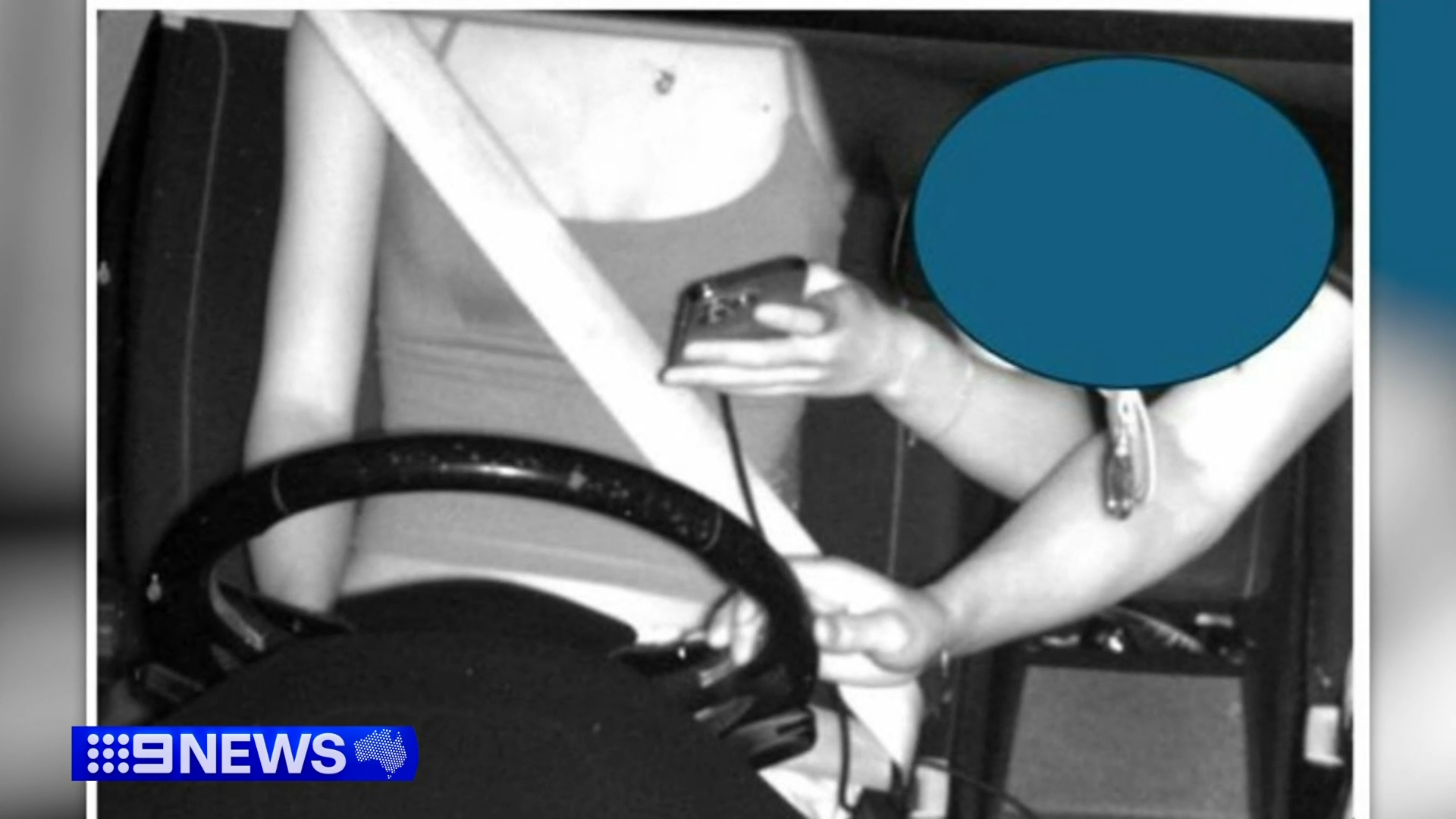
Images of drivers eating cereal, painting their nails and using nail clippers were just some of 31,000 offences caught on camera in four weeks.
Western Australia's new AI safety cameras have fined more than 31,000 distracted, speeding and unrestrained drivers in their first four weeks of operation.
Six camera trailers dotted across the state, as well as three fixed cameras on the Kwinana Freeway, have been operating on a cautionary basis for eight months.
That period ended on October 7, after which $13 million in fines were handed out in the next month.
READ MORE: Tom Silvagni, son of AFL great Stephen Silvagni, identified as a rapist as order lifts
The revenue from fines is being reinvested into road safety.
"If the AI system believes there is an offense, then two humans will look at those photos and make a judgment," Road Safety Minister Reece Whitby said.
More than 12,000 motorists were caught using their mobile phones and about 10,000 drivers were snapped without a seatbelt.
"It's beyond mind-boggling why anyone would not put on a seatbelt on," Whitby said.
"For goodness sake, please, please exercise caution, be responsible."
Images of drivers eating cereal, painting their nails and using nail clippers were just some of the offences caught on camera.
One driver was seen using her phone while her passenger steered the car.
Most shocking of all, a truck driver was snapped driving at 100km/h with no seatbelt, with a mobile phone in one hand and a clipboard-shaped object in the other.
READ MORE: The Christmas toys emergency doctors don't want you to buy for children
"People are normalising the car as an extension of their home, when you see some of these activities," University of Western Australia Professor Teresa Senserrick said.
Authorities hope the cameras can help change driver behaviour as the state approaches its worst year of road fatalities in almost a decade.
Academics at the WA Centre for Road Safety Research at UWA hope a new high-tech driving simulator can help prove just how dangerous these distractions can be.
"It's usually fractions of seconds that are the difference between either being able to avoid a crash or at least being in a low-impact crash," Senserrick said.
DOWNLOAD THE 9NEWS APP: Stay across all the latest in breaking news, sport, politics and the weather via our news app and get notifications sent straight to your smartphone. Available on the Apple App Store and Google Play.
 British backpacker jailed for e-scooter crash that killed Perth dad
 Surprise culprits forcing Aussies into bankruptcy
 More than 1000 jobs saved in government's aluminium smelter deal
 Brittany Higgins bankrupted by former Liberal senator after defamation loss
 'So evil': Woman raped by Tom Silvagni says he violated her body and trust
 SA adopts nearly all royal commission recommendations, commits $674m to address DV
 Second minister refers family travel expenses for audit as Albanese seeks advice
 'Overwhelming despair': Boat driver's tears for fiancee
 Reality TV star jailed for interfering with crash probe
 David Jones hints at return of Christmas tradition next year
 Driver walks away from chaotic peak-hour crash in Adelaide
 US proposes major change to sunscreen regulations
 Four-metre tiger shark caught on drumline off popular beach
 Melbourne's West Gate Tunnel is finally opening. Here's what it means for motorists
 Appalling conditions inside notorious Australian prison found by inspectors
 Idyllic tourist hotspot introduces the death penalty for a common offence
 Donald Trump's 'gold card' visa program goes live
 The 'king of all meteor showers' is peaking this weekend. Here's how to see it
 The Christmas toys emergency doctors don't want you to buy for children